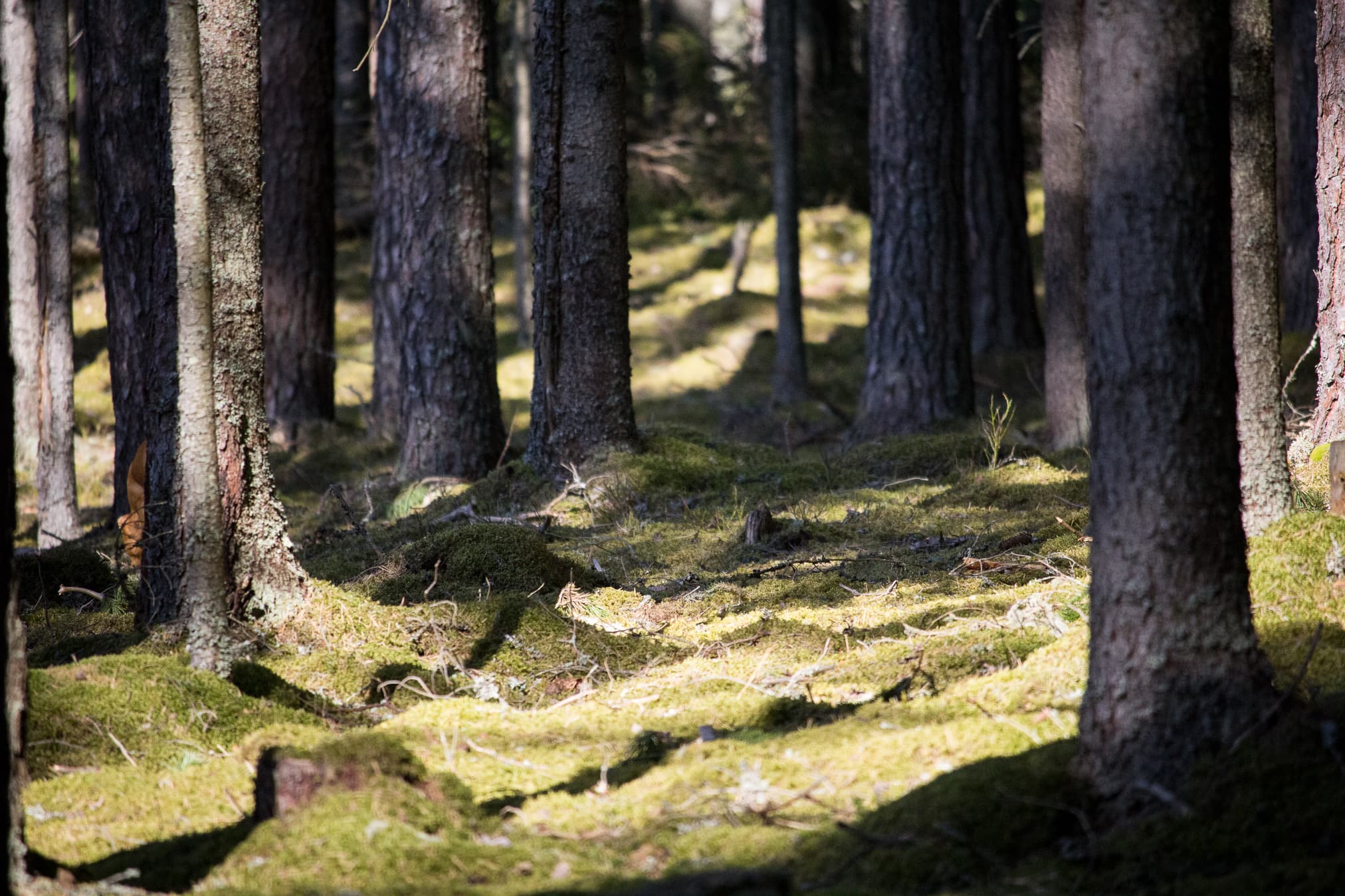
When Crisis Creates Opportunity: Why Market Turbulence May Be the Best Time to Invest in Forest Land
Global instability is reshaping investor behavior.
The current geopolitical and economic environment is creating significant uncertainty in global markets.
Several factors are driving anxiety:
- The ongoing Russia–Ukraine war, which continues to destabilize energy and commodity markets.
- Escalating tensions in the Middle East, particularly around Iran, increasing the risk of energy supply disruptions.
- Rising oil prices, which directly impact transportation, production costs, and inflation across Europe.
- Persistently high interest rates, which are slowing economic growth and putting pressure on asset valuations.
When uncertainty rises, investors typically rebalance their portfolios toward defensive assets. Capital often flows into cash, government bonds, gold, and other instruments considered safe havens during periods of instability.
However, history shows that periods of uncertainty often create the best entry points for long-term investments.
Why crises create undervalued assets
During economic or geopolitical crises, asset prices often fall not because of deteriorating fundamentals, but because of liquidity pressure and risk aversion.
This pattern has repeated across many crises:
Crisis | Market Reaction | Long-Term Result |
2008 Global Financial Crisis | Real estate prices dropped 20–40% in many regions | Significant recovery and long-term appreciation |
COVID-19 shock (2020) | Temporary collapse in many asset prices | Rapid rebound in real assets |
Energy crisis in Europe (2022) | Agricultural and forestry markets slowed | Increasing long-term demand for land resources |
In these periods, investors with long-term capital gain access to assets at discounted prices.
Land-based assets - especially forestry - have historically been among the most resilient.
Why forestry remains one of the most stable real assets
Forest land has several characteristics that make it particularly resilient during market instability.
1. Biological growth continues regardless of market cycles
Unlike financial assets, trees continue to grow regardless of market volatility.
According to forestry investment studies, timber volume typically grows 2–6% annually, even without active harvesting. This biological growth creates a natural value appreciation mechanism.
2. Timber demand remains structurally strong
Global demand for wood continues to rise due to:
- construction demand
- packaging and logistics
- renewable materials replacing plastics
- biomass and energy production
According to the Food and Agriculture Organization (FAO), global consumption of primary processed wood products is projected to increase by approximately 37% by 2050 under a baseline scenario. In scenarios where the transition toward a bio-based economy accelerates, demand for wood products could grow even more rapidly.
3. Forestry acts as an inflation hedge
Land and timber have historically shown strong performance during inflationary periods.
As inflation increases:
- commodity prices rise
- construction materials become more expensive
- land values tend to increase
Because timber is a real asset linked to commodity markets, it often preserves purchasing power better than many financial instruments.
Why current market stress may lower forest land prices
Despite strong fundamentals, short-term crises can temporarily push land prices lower.
Several mechanisms drive this:
1. Liquidity pressure
Some landowners sell assets to improve cash flow during economic uncertainty.
2. Reduced investor activity
Institutional investors may temporarily pause acquisitions while markets stabilize.
3. Financing constraints
Higher interest rates make leveraged land purchases more expensive, reducing short-term demand.
All of these factors can create temporary price inefficiencies in the land market.
For long-term investors, these inefficiencies can represent rare entry opportunities.
A historical pattern: the best investments often begin during uncertainty
Many of the most successful long-term investments have been made during periods of high uncertainty.
As legendary investor Howard Marks noted:
“The biggest investing errors come not from factors that are informational or analytical, but from those that are psychological.”
When fear dominates markets, prices often reflect emotions rather than fundamentals.
For disciplined investors, this is precisely when the risk-reward balance becomes most attractive.
Why forest land may benefit from long-term global trends
Beyond short-term market fluctuations, forestry is supported by several powerful structural trends:
- Climate policy and carbon markets increasing the value of forest ecosystems
- Demand for sustainable materials replacing steel, concrete, and plastics
- Limited global supply of productive forest land
- Population growth and rising construction demand
These forces suggest that forest land may continue to play an increasingly important role in long-term investment portfolios.
What crisis windows look like in practice
The COVID-19 crisis provides a clear example of how market panic can temporarily create entry opportunities.
Clear example is United Airlines. According to historical data from Yahoo Finance’z, the company’s stock traded at $87.85 on January 14, 2020. As the pandemic unfolded and global travel demand collapsed, the share price dropped to $20.30 by May 14, 2020, representing a decline of approximately 76.9% in just four months.
However, as the aviation industry gradually recovered and travel demand returned, the company’s stock also rebounded. By 2025, United Airlines shares had already surpassed $100, demonstrating how dramatically sentiment can reverse once a crisis stabilizes.
For investors who were willing to buy during the period of maximum uncertainty, the opportunity was significant. Purchasing shares near the crisis low of $20 and selling around $100 would represent a return of approximately 400%.
This case illustrates a broader investment principle: periods of extreme uncertainty can temporarily push prices far below their long-term potential, creating rare entry points for investors with patience and a long-term perspective.
Conclusion: when uncertainty becomes opportunity
Periods of geopolitical instability and economic uncertainty are uncomfortable for investors.
However, they often create rare opportunities to acquire high-quality assets at attractive valuations.
Forest land represents a unique asset class that combines:
- biological growth
- real asset protection against inflation
- increasing demand for sustainable materials
- long-term environmental value
For investors willing to think beyond short-term volatility, market turbulence can become not just a risk - but a strategic opportunity.